
GLP BLOG
Guest Post: Our Critical Human Skills
I am delighted to share a post from friend and colleague Chan Hardwick, former Headmaster at Blair Academy:
The Saturday Review edition of last week’s The Wall Street Journal (November 23rd) led with a seemingly familiar article about how machines are replacing people by performing more and more traditionally human tasks. However, rather than being about what people can do that machines cannot (yet), the article (“Automation Make Us Dumb,” by Nicholas Carr) focused on the claim that the rise of machines—and particularly cutting edge software—has “de-skilled” humans, as we stop using and practicing various manual, critical thinking, and aesthetic skills that machines have begun to assume. The three examples he uses—and there could certainly be more—are airline pilots, doctors, and architects.
So That's Why We Study Digestion?
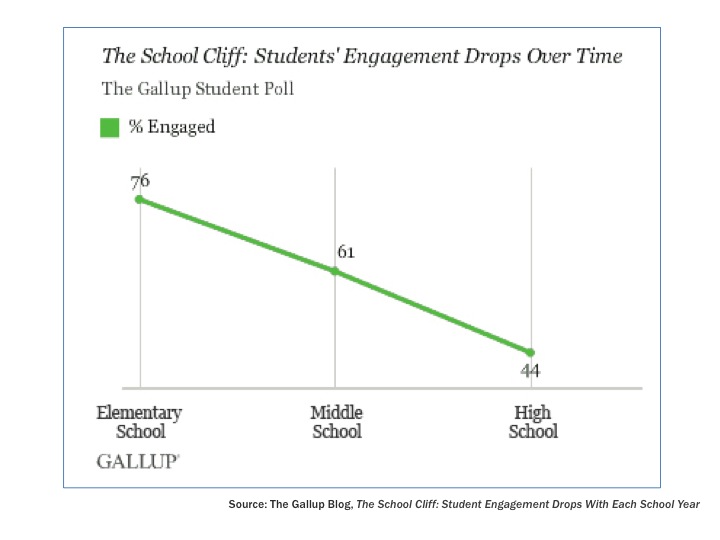
Imagine a middle school girl: she is a strong student enrolled in a fine independent school. She works hard to perform to the highest standard; she is eager to please and to learn. At the moment, she is overwhelmed studying for a unit test on the digestive system. Her teacher has provided a clearly outlined study guide that requires her to memorize a broad array of facts--from the length of the esophagus to the names of the enzymes working within the digestive process. Her learning task, from her perspective, is clear: memorize all the terms and definitions (neatly transcribed on index cards) and earn an A. She labors hard and asks her mother to quiz her. Her mother obliges but is concerned by her daughters stress level, which pops up a notch each time her recall fails. What if she can’t remember everything? She seems to have stopped learning and is focused on her mounting concern for what will happen if she can’t memorize everything.
School Change
If We Want to Reimagine the Model for School, We Must Reimagine the Model for Change
Change in organizations is hard but there are ways to make it easier, if we are willing to think differently about how we do it. And never has there been a more critical time for change in schools than now. Start by making the case for change, and then approach change in a whole new way. Here’s how in a nutshell...

Is Your School Afraid of Missing Out?
It’s a Saturday morning and my twenty year-old son is lying in bed with a fever, aches and pains. I suggest bed is the best place to be, but he resists, groaning, “Mom…...I have FOMO!”
What on earth is FOMO? I wonder for a moment if this is some horrible disease spreading across college campuses before realizing that I have been living under a rock. It occurs to me that FOMO is “text speak”--something akin to LOL--and, sure enough, I’m right. My son has Fear Of Missing Out and, apparently, this is a serious enough condition to prompt the creation of an acronym.
Watch What Happens When Teachers Innovate
Analyze This!
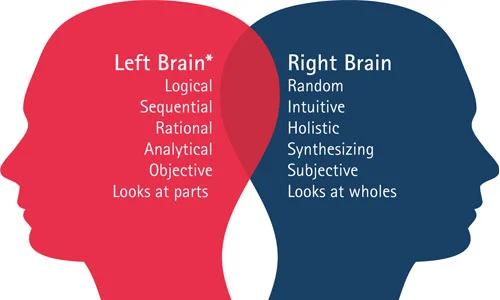
Those of you who know me know that Roger Martin’s message is one I carry with me when talking about strategic planning. For schools, it's often received with some skepticism and I get lots of healthy and thoughtful pushback. Board members often worry that the process I propose for strategy development is not logical or linear enough. It feels uncertain and ambiguous. Some want to quickly get to metrics; they want to begin with data and work off benchmarks. Some confuse an organizational audit with strategy. Faculty often react a bit differently: ranging from enormously excited to somewhat unglued or deeply resistant. It's either an adventure or it’s disruptive; either way, it’s hard work. It requires us to open up, to test our assumptions about how we operate, and to examine possibilities that might change our current reality.
GLP's Summer Reading Short List
Summer reading lists abound...and often the same books seem to circulate among us. We thought we would take a stab at suggesting three terrific titles we think matter for school leaders today--so stick them in your beach bag, at your bedside, or on your e-reader. And let us know what we’ve missed; we will share your suggestions!
Visit to Stanford’s d.school - Learning and Space Reimagined
We were so excited to visit Stanford’s d.school (Institute of Design at Stanford) in late February and, frankly, it was better than we imagined!
NAIS Annual Conference: Change is in the Air...Now What?
Last week Liz and I headed to Orlando for the NAIS Annual Conference, three days packed with a variety of sessions exploring how independent education can change to become better for our students and families while still maintaining the critical aspects that make each school unique. Creativity, innovation, sustainability and student engagement are just a few of the myriad of topics educators from across the country and world presented on. There’s an incredible buzz in the independent school community about opportunities to improve and innovate in order to better prepare students for a new era - whether around teaching, curriculum or assessment. Our question is: now what?
A Conversation with Tony Wagner - Start by Defining the Problem
People often ask me what I like best about my job and my first answer is usually something about how I get to work with great people. Yes, I love schools, and yes, I am passionate about education, fascinated by leadership and and always thinking about how change happens, but most of all, I love these things when I can talk about them with great people and make amazing things happen.