
GLP BLOG
Five Days at Sundance
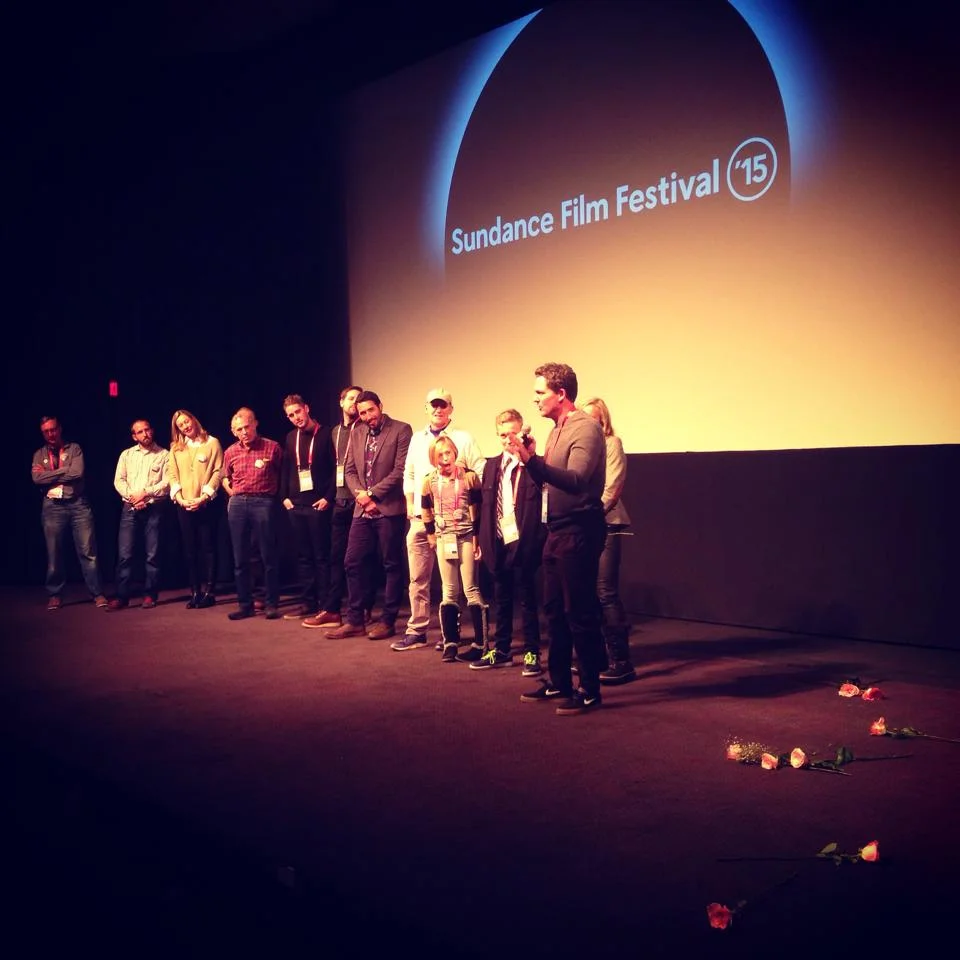
The air just feels different in Park City at the Sundance Film Festival. Maybe it is the mountains of Utah, but it is also a mood: clear, energizing and optimistic. Liz and I were complete “newbies”--with no expectations but plenty of anticipation for each experience and corner turned (including the age old question: what to wear?). We kept looking around in wonderment: How did we get here? Suffice it to say that Sundance 2015 has been a unique experience, landing us in the midst of creative, socially-minded, and passionate people all interested in the power of film to tell stories, provoke conversations and illuminate issues that, if not important when we arrived, were important to us when we left. I’d love to tell tales embracing our entire festival experience--but that’s for another post.

Creating Forward Looking Boards
Managing the board of trustees as an entity rather than the sum of its parts represents a significant responsibility for any head of school. While there will inevitably be a steady and personal communication stream with some number of individual trustees, the HOS should make an annual goal of ensuring that the board of trustees’ work on the whole is purposeful to the school, personally edifying, and worthwhile overall. In that regard, much of the board’s work comes at or around the yearly group of trustee meetings, numbering as many as ten for day schools or as few as two for boarding schools; most schools, day or boarding, fall somewhere in between those numbers. And it is all too easy to fall into a routine of having the meeting boil down to a few dozen people sitting around a long table listening to reports of past data or events. Indeed, the international consulting firm McKinsey & Company asserts that around 70% of most board meetings—profit and non-profit—are spent listening to past performance presentations rather than focusing on matters crucial to future prosperity.
Response to UVA
What the college sexual assault phenomenon means to independent schools
When an out-of-the-blue parent call starts with “Headmaster, you have a serious problem,” your focus goes way up while your stomach goes pretty far down. When I received such a call one spring in the late 1990’s, I got up, closed my office door, and said, “You have my attention.” The caller—the father of a younger girl at Blair—told me that he had reason to believe that a senior boy, in fact a post-graduate senior (meaning the boy would be at least 18-years-old) had had sexual relations with a freshman girl. It was, he allowed, consensual and oral—which is in fact “sexual relations” in legal terms—but nonetheless of significant concern to him both for the students involved and the school generally. Having learned about the incident through social media of some sort (and I suspected but never discovered if he was talking about his own daughter), the father then asked, “What would you do if I told you the boy’s name?” Without hesitation I replied, “Call the school lawyer, who I suspect would then call the district attorney.” There was a long pause, before he said, “I ask that you think about a way to use this incident in an educational way, and then get back to me. Then I shall let you know whether or not I want tell you more.”

TABS Report 2014
I got back to South Carolina last week following a return visit to the annual conference of The Association of Boarding Schools (TABS), this year held in Washington. As usual, the downtown JW Marriott hotel—in sight of the Monument and a short walk to the Mall—served as the site for the various meetings, seminars, receptions, coffee breaks and non-stop networking. The Marriott offers the unusual experience of open escalators from the main lobby at street level switch backing down through three floors to the grand ballroom below. The advantage of this scheme allows an attendee the opportunity to spot (or perhaps avoid) a networking contact from a great distance, with a decent chance of bagging the quarry without having to resort to texting. Of course, pitching three floors down over the rather low escalator handrails looms as a deterrent from doing on your toes neck-craning, but I believe the conference went forward without such an accident…this year. Lots of people try to meet at the bar, which is rather small, or out in front of the lobby level Starbucks, which catches the elevator traffic, and for two days the hotel ‘s nooks and quiet spots hummed with conversations, meetings, and interviews, so much a part of every first weekend in December.
Guest Post: Our Critical Human Skills
I am delighted to share a post from friend and colleague Chan Hardwick, former Headmaster at Blair Academy:
The Saturday Review edition of last week’s The Wall Street Journal (November 23rd) led with a seemingly familiar article about how machines are replacing people by performing more and more traditionally human tasks. However, rather than being about what people can do that machines cannot (yet), the article (“Automation Make Us Dumb,” by Nicholas Carr) focused on the claim that the rise of machines—and particularly cutting edge software—has “de-skilled” humans, as we stop using and practicing various manual, critical thinking, and aesthetic skills that machines have begun to assume. The three examples he uses—and there could certainly be more—are airline pilots, doctors, and architects.
So That's Why We Study Digestion?
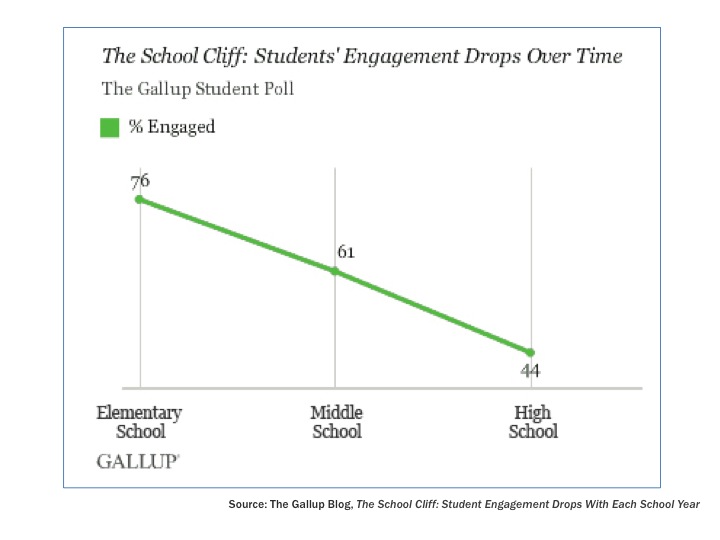
Imagine a middle school girl: she is a strong student enrolled in a fine independent school. She works hard to perform to the highest standard; she is eager to please and to learn. At the moment, she is overwhelmed studying for a unit test on the digestive system. Her teacher has provided a clearly outlined study guide that requires her to memorize a broad array of facts--from the length of the esophagus to the names of the enzymes working within the digestive process. Her learning task, from her perspective, is clear: memorize all the terms and definitions (neatly transcribed on index cards) and earn an A. She labors hard and asks her mother to quiz her. Her mother obliges but is concerned by her daughters stress level, which pops up a notch each time her recall fails. What if she can’t remember everything? She seems to have stopped learning and is focused on her mounting concern for what will happen if she can’t memorize everything.
School Change
If We Want to Reimagine the Model for School, We Must Reimagine the Model for Change
Change in organizations is hard but there are ways to make it easier, if we are willing to think differently about how we do it. And never has there been a more critical time for change in schools than now. Start by making the case for change, and then approach change in a whole new way. Here’s how in a nutshell...
Is Your School Afraid of Missing Out?
It’s a Saturday morning and my twenty year-old son is lying in bed with a fever, aches and pains. I suggest bed is the best place to be, but he resists, groaning, “Mom…...I have FOMO!”
What on earth is FOMO? I wonder for a moment if this is some horrible disease spreading across college campuses before realizing that I have been living under a rock. It occurs to me that FOMO is “text speak”--something akin to LOL--and, sure enough, I’m right. My son has Fear Of Missing Out and, apparently, this is a serious enough condition to prompt the creation of an acronym.
Watch What Happens When Teachers Innovate
Analyze This!
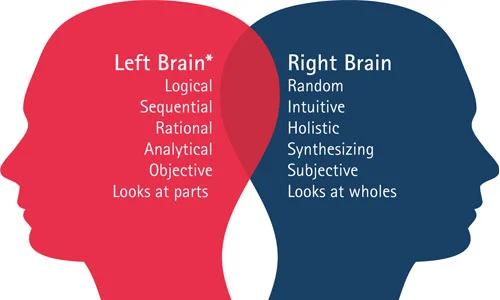
Those of you who know me know that Roger Martin’s message is one I carry with me when talking about strategic planning. For schools, it's often received with some skepticism and I get lots of healthy and thoughtful pushback. Board members often worry that the process I propose for strategy development is not logical or linear enough. It feels uncertain and ambiguous. Some want to quickly get to metrics; they want to begin with data and work off benchmarks. Some confuse an organizational audit with strategy. Faculty often react a bit differently: ranging from enormously excited to somewhat unglued or deeply resistant. It's either an adventure or it’s disruptive; either way, it’s hard work. It requires us to open up, to test our assumptions about how we operate, and to examine possibilities that might change our current reality.