
GLP BLOG
The Competent Leader
his is the first in a blog series focusing on the skills required for headship in today’s changing world.
Recently I was sitting out on my porch looking out on the Okatie River and catching up with an old friend. I was in the first days of recovering from a May orthopedic procedure that would keep me off my feet and housebound for the month of June waiting for literal marching orders from my doctor. From this procedure and considerable travel beforehand, my blog writing had taken a holiday as I pushed through the late spring, getting increasingly comfortable with my inner consultant, so to speak. However, having this chance to “talk shop” was a welcome break from the daily routine of recovery—watching the tide rise and fall on the Okatie River—and our conversation stimulated this blog offering—and the series to follow.
GLP Summer Reading List 2015
Here it is! GLP’s summer reading list is ready to go--whether at the beach, in your office or snuggled up, we think you’ll find these books are as entertaining as they are inspiring and informative. And all are highly readable. We hope you enjoy these books as much as we did. Please let us know what you think! And if you missed out on our list from last summer, check it out here.
Why Deeper Learning Matters
We talk a lot these days about the ubiquity of content and the pressing need for skill development in learners. If you don't listen closely or critically, it would be easy to come away believing that content doesn't really matter anymore--as long as we know how to access it...
NAIS Report: Frozen Out in Boston
Well, I won’t mince words: NAIS blew it. When offered the chance to have a “Design the Revolution” conference-sponsored showing of Most Likely to Succeed, the new documentary on innovative responses to the present and future education design landscape, the National Association of Independent Schools (NAIS) gave the offer a quick sniff and turned the opportunity down. And that’s a shame. Sure, the conference was over a year in planning and shifting the program around to accommodate the film would have been daunting; I mean—good lord!—the programs were already printed. But shouldn’t NAIS model good teaching and adaptability? And really, doesn’t every good teacher seize special moments, change the plan, and invigorate the educational environment when opportunity knocks?
Inside Peek: Newton North High School’s Innovation Lab
After two snowy days at the NAIS Conference in Boston, the GLP team spent the last afternoon touring Newton North High School’s classrooms and Innovation Lab. The Graham Gund designed school is located 20 minutes—and a world away—from the NAIS “conference-speak” of design innovation. Here is the “real deal”: energetic kids, bubbling flasks, tangible projects, and inspiring educators.
Talking Education to Grandparents
The current revolution in education seems to confuse those people not directly involved in or up-to-date with the field, in part I think because of the “eduspeak” involved: flipped classrooms, STEM, STEAM, MOOC, Common Core, Race to the Top, project based learning, and so on. This uncertainty mostly affects the Baby Boom generation, people who are indeed puzzled by much of “the new” in this rapidly evolving digital culture. Despite not having a Twitter account or not fully grasping the joys of Instagram, this 50+ generation is nonetheless eager to understand the educational climate, to figure out the language, to be connected. And why not? They are often called upon to take care of their grandchildren, and even pay for their education.
Five Days at Sundance
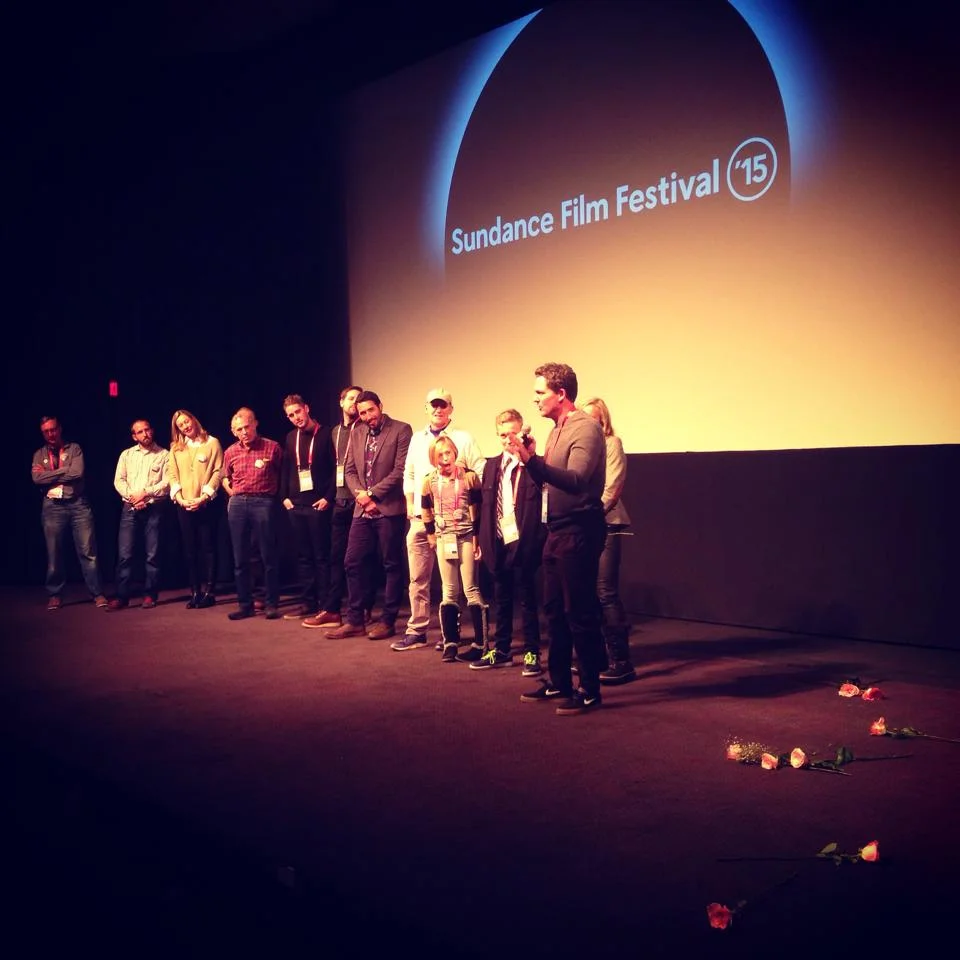
The air just feels different in Park City at the Sundance Film Festival. Maybe it is the mountains of Utah, but it is also a mood: clear, energizing and optimistic. Liz and I were complete “newbies”--with no expectations but plenty of anticipation for each experience and corner turned (including the age old question: what to wear?). We kept looking around in wonderment: How did we get here? Suffice it to say that Sundance 2015 has been a unique experience, landing us in the midst of creative, socially-minded, and passionate people all interested in the power of film to tell stories, provoke conversations and illuminate issues that, if not important when we arrived, were important to us when we left. I’d love to tell tales embracing our entire festival experience--but that’s for another post.

Creating Forward Looking Boards
Managing the board of trustees as an entity rather than the sum of its parts represents a significant responsibility for any head of school. While there will inevitably be a steady and personal communication stream with some number of individual trustees, the HOS should make an annual goal of ensuring that the board of trustees’ work on the whole is purposeful to the school, personally edifying, and worthwhile overall. In that regard, much of the board’s work comes at or around the yearly group of trustee meetings, numbering as many as ten for day schools or as few as two for boarding schools; most schools, day or boarding, fall somewhere in between those numbers. And it is all too easy to fall into a routine of having the meeting boil down to a few dozen people sitting around a long table listening to reports of past data or events. Indeed, the international consulting firm McKinsey & Company asserts that around 70% of most board meetings—profit and non-profit—are spent listening to past performance presentations rather than focusing on matters crucial to future prosperity.
Response to UVA
What the college sexual assault phenomenon means to independent schools
When an out-of-the-blue parent call starts with “Headmaster, you have a serious problem,” your focus goes way up while your stomach goes pretty far down. When I received such a call one spring in the late 1990’s, I got up, closed my office door, and said, “You have my attention.” The caller—the father of a younger girl at Blair—told me that he had reason to believe that a senior boy, in fact a post-graduate senior (meaning the boy would be at least 18-years-old) had had sexual relations with a freshman girl. It was, he allowed, consensual and oral—which is in fact “sexual relations” in legal terms—but nonetheless of significant concern to him both for the students involved and the school generally. Having learned about the incident through social media of some sort (and I suspected but never discovered if he was talking about his own daughter), the father then asked, “What would you do if I told you the boy’s name?” Without hesitation I replied, “Call the school lawyer, who I suspect would then call the district attorney.” There was a long pause, before he said, “I ask that you think about a way to use this incident in an educational way, and then get back to me. Then I shall let you know whether or not I want tell you more.”

TABS Report 2014
I got back to South Carolina last week following a return visit to the annual conference of The Association of Boarding Schools (TABS), this year held in Washington. As usual, the downtown JW Marriott hotel—in sight of the Monument and a short walk to the Mall—served as the site for the various meetings, seminars, receptions, coffee breaks and non-stop networking. The Marriott offers the unusual experience of open escalators from the main lobby at street level switch backing down through three floors to the grand ballroom below. The advantage of this scheme allows an attendee the opportunity to spot (or perhaps avoid) a networking contact from a great distance, with a decent chance of bagging the quarry without having to resort to texting. Of course, pitching three floors down over the rather low escalator handrails looms as a deterrent from doing on your toes neck-craning, but I believe the conference went forward without such an accident…this year. Lots of people try to meet at the bar, which is rather small, or out in front of the lobby level Starbucks, which catches the elevator traffic, and for two days the hotel ‘s nooks and quiet spots hummed with conversations, meetings, and interviews, so much a part of every first weekend in December.